
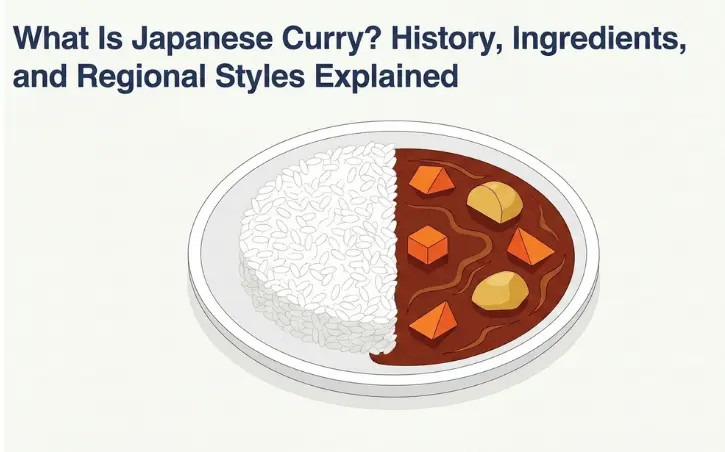
If you’ve only had Indian or Thai curry, Japanese curry might surprise you. It’s thick, mild, slightly sweet, and almost gravy-like, ladled over a mound of short-grain rice rather than eaten with flatbread. It’s less about chasing heat and more about deep, savory comfort — closer to a stew than a spice-forward sauce. And despite the name, it didn’t come from India at all. It arrived in Japan by way of the British Navy, and Japanese cooks spent more than a century reshaping it into something entirely their own.
What Makes Japanese Curry Different
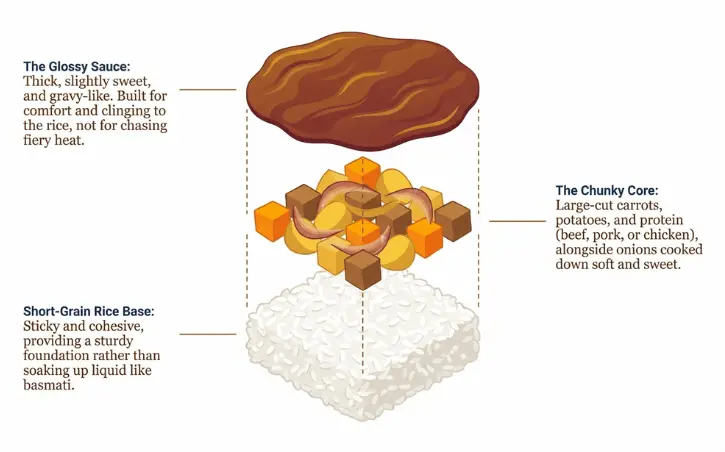
Most Japanese curry (kare or kare raisu, curry rice) starts from a roux: butter or oil cooked with flour and curry powder into a thick paste, then simmered with stock, meat, and vegetables until it forms a glossy, clingy sauce. That flour base is the key difference from South or Southeast Asian curries, which typically rely on coconut milk, yogurt, or a fresh spice paste for body instead of a roux.
The flavor profile leans sweet-savory rather than fiery. Caramelized onions, grated apple, honey, or a touch of chocolate or coffee often round out the sauce, and heat is treated as an adjustable setting — mild, medium, and hot are standard options — rather than the whole point of the dish.
The Surprising History of Japanese Curry
Japanese curry’s story begins in the Meiji era (1868–1912), when Japan was rapidly modernizing its military along British lines. The Imperial Japanese Navy adopted British Royal Navy practices wholesale, and curry — which the British had already adapted from Indian cooking into a shipboard stew — came along with them. It wasn’t copied from Indian kitchens directly; it was inherited secondhand, already reshaped by British tastes into something thicker and less intensely spiced.
The dish solved a real problem. Sailors and soldiers on unlimited white rice were falling ill with beriberi, a debilitating thiamine deficiency, and naval officials needed a way to add meat, vegetables, and nutritional balance to crews’ diets without causing unrest over unfamiliar foods. A rich, floured curry sauce did double duty: it masked the taste of meat for a population unused to eating much of it, and it could be made cheaply in bulk, as Atlas Obscura documents in its history of navy curry.
Curry stayed largely a military dish because imported curry powder was expensive, until 1923, when Minejiro Yamazaki began producing Japan’s first domestically made curry powder under the brand S&B. That single shift — no longer needing to import spice from England — is what let curry move from naval mess halls into ordinary households. By 1956, the solid, block-form curry roux we know today had been developed, turning a labor-intensive stew into a weeknight staple that just needed hot water and a pot.
What Goes Into Japanese Curry
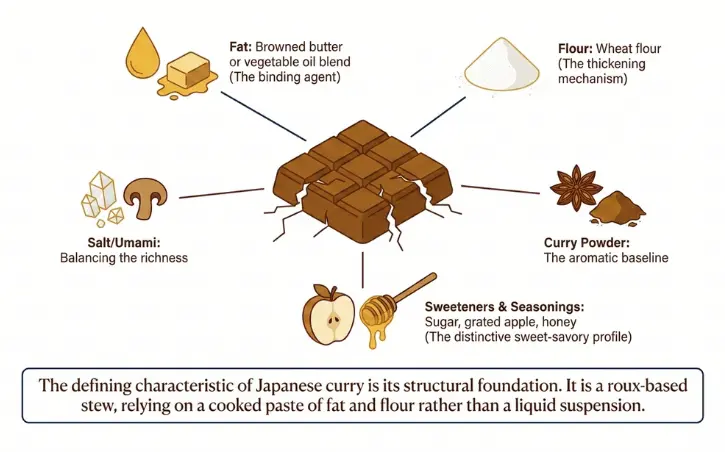
A store-bought roux block is built from browned fat (traditionally butter, now often a vegetable oil blend), wheat flour, curry powder, sugar, salt, and a mix of spices and seasonings. Popular brands like S&B’s Golden Curry and House Foods’ Vermont Curry each have a signature personality — Vermont Curry leans sweeter with apple and honey, while Golden Curry is more straightforwardly spiced.
From there, the classic build is simple: onions cooked down until soft and slightly sweet, carrots and potatoes cut into large chunks, and a protein — beef, pork, or chicken are all common — simmered together in stock or water. The roux is stirred in near the end to thicken everything into a sauce with a texture somewhere between gravy and stew.
How Japanese Curry Is Made and Served
The base method rarely changes: brown the meat and onions, simmer with vegetables and stock until tender, then stir in roux and let it thicken. What changes is the topping and format. A breaded, fried cutlet — pork (tonkatsu) or chicken — turns the dish into katsu curry, arguably Japan’s most popular curry variation and a fixture at specialty chains. Curry also shows up stuffed into a fried bread bun as kare pan, or poured over thick udon noodles as curry udon, where the sauce is thinned slightly and enriched with dashi.
Regional Japanese Curry Styles You Should Know
Beyond the everyday home version, a handful of cities have developed curry styles distinctive enough to become local specialties in their own right.
| Style | Region | What Sets It Apart |
|---|---|---|
| Soup Curry | Sapporo, Hokkaido | A thin, brothy curry served separately from rice, with large-cut, often flash-fried vegetables and bone-in chicken |
| Kanazawa Curry | Kanazawa, Ishikawa | An extremely thick, almost black roux served on a steel plate with shredded cabbage and a cutlet, eaten with a fork |
| Yokosuka Navy Curry | Yokosuka, Kanagawa | A recreation of the original Meiji-era naval recipe — beef, potato, and carrot — traditionally served with milk and salad |
Sapporo’s soup curry has the most unusual backstory of the three. It began in the 1970s at a café that served it as a staff meal before adding it to the menu, blending Southeast and South Asian curry influences with Chinese-style medicinal soup traditions. According to the Japan National Tourism Organization, it stayed a Hokkaido-only phenomenon for decades before spreading nationally in the 2000s. Kanazawa curry, by contrast, is defined by presentation as much as flavor — the steel plate and cabbage garnish are as central to the dish’s identity as the curry itself.
Where to Try or Buy Japanese Curry in Canada
Curry roux blocks from S&B and House Foods are widely stocked in Canadian Asian grocery chains and in the international aisle of many well-stocked supermarkets, making homemade Japanese curry an easy weeknight option. If you’d rather order it, curry-focused restaurants exist in most major Canadian cities — Toronto’s Kaiju, for instance, makes its curry sauce from an in-house recipe rather than a packaged roux, offering a more scratch-made take than the pre-mixed base most home cooks use. Worth noting for anyone hoping to find Japan’s famous CoCo Ichibanya chain locally: as of 2026, CoCo Ichibanya has no officially operated locations in Canada, so a trip to Japan (or the chain’s UK or US branches) is currently the only way to try the original.
DiningDiscover Insight
What makes Japanese curry worth understanding isn’t just the flavor — it’s the pattern behind it. A foreign dish arrived through a practical, almost accidental channel, solved a real nutritional problem, and was then reshaped by home cooks and regional chefs until barely a trace of its original context remained. That’s a pattern you’ll see again and again in Japanese food history: adoption followed by total reinvention, until the “foreign” dish becomes something unmistakably local.
